


Taizhou Hanner Machinery Co., Ltd. is one of the leading manufacturers and suppliers of electric centrifugal water pump in China, also supports customized service. Welcome to wholesale high quality electric centrifugal water pump at competitive price from our factory. Contact us for more details.
Why Choose Us?
Our Products
Our products are all strictly controlled at every step during designing, producing, packing and quality controlling process. We will keep optimizing our products and expanding the scope of product category.
Quick Transportation
We cooperate with professional sea shipping, air and logistics companies to provide you with the best transportation solution.
Cheap Price
We have a professional purchasing team and costing team, trying to reduce costs and profits, and provide you with a good price.
One-stop Solution
With rich experience and one-to-one service, we can help you choose products and answer technical questions.
Electric centrifugal water pump is a type of pump that uses an impeller to increase the speed of water and move it through the pump's housing. It is powered by electric energy and is commonly used in a variety of water transfer applications such as irrigation, drainage, and water supply for residential, commercial, and industrial purposes. The impeller rotates at high speed, creating a centrifugal force that propels water through the pump. Electric centrifugal water pumps are efficient, reliable, and easy to use, making them a popular choice for water transfer applications.


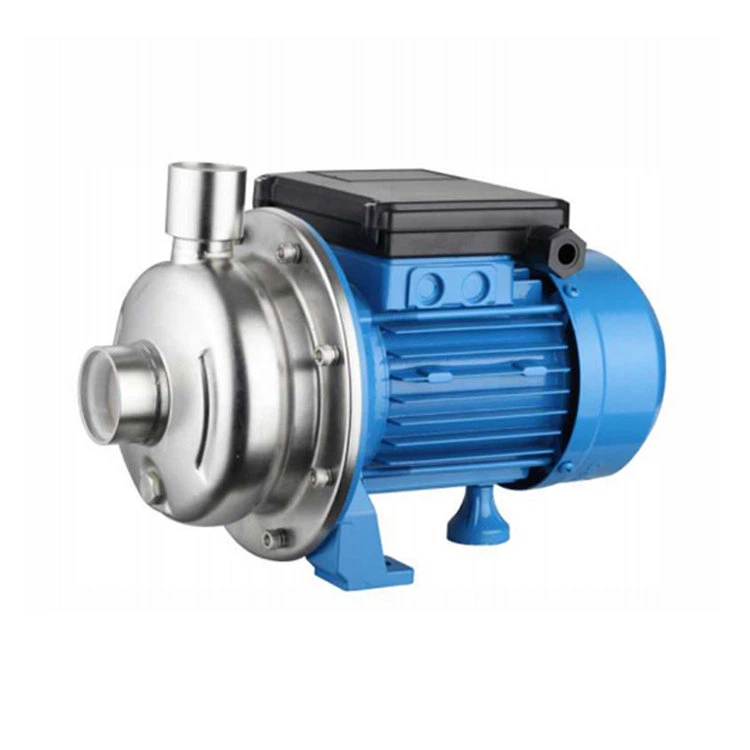


Characteristic of Electric Centrifugal Water Pump
Energy efficient
Electric centrifugal water pumps are known to consume less power than other types of water pumps, which makes them cost-effective in the long run.
High-speed performance
The electric motor in a centrifugal water pump can spin at high speeds, typically ranging from 2900 to 3450 rpm, creating a high volume of water flow.
Easy to operate
Electric centrifugal water pumps are designed for easy operation, with various controls and features included for simple and straightforward use.
Low maintenance
These water pumps require little maintenance, with the electric motor being the only component that requires regular checks and maintenance.
Versatility
Electric centrifugal water pumps can be used in a wide range of applications, from irrigation and domestic use to industrial purposes.
Compact and portable
These water pumps are often lightweight and compact, making them easy to move around and transport as needed.
Reliable
Electric centrifugal water pumps are known for their durability and reliability, providing consistent performance over time.
Inexpensive
Compared to other types of water pumps, electric centrifugal water pumps are relatively inexpensive, making them accessible to a wide range of customers.
Electric centrifugal water pumps are hydraulically operated machines characterised by their ability to transmit energy to fluids (in particular to liquids) through the work of a field of centrifugal forces. Their main purpose is to transfer fluids through an increase in pressure. Centrifugal pumps can have different structures, but their operating principle and fluid dynamic characteristics are always the same.
Schematically, centrifugal pumps are formed of an impeller that rotates inside the casing. The impeller comprises a series of blades, preferably of a radial design, which transmit kinetic energy to the fluid being pumped. The casing is equipped with suction and discharge nozzles for the fluid being pumped. The suction nozzle has an axis that corresponds with the impeller's rotational axis, while the discharge nozzle has a normal axis to the impeller axis, but still lying on the plane passing through the axis itself.

● The fluid being pumped enters continuously through the pump's suction nozzle at the centre of the impeller.
● From here it is accelerated in a radial direction as far as the edge of the impeller, where it drains into the casing.
● The fluid current is accelerated by the push that the impeller blades, thanks to their curvature, transmit to the current itself. In this way the fluid acquires energy, mainly in the form of an increase in its average speed (kinetic energy).
● Inside the casing, the liquid is suitably slowed down thanks to the gradually growing section in the direction of motion.
● A section increase such as this is generally obtained by designing the peripheral part of the casing (tube aerator) in a spiral shape with a transverse section (generally a circular, trapezoidal or rectangular shape) that varies from zero up to the value of the discharge nozzle section.
● In this way, the kinetic energy held by the fluid is converted into pressure energy.
● The casing, from the part opposite the suction nozzle, is closed with the cover. In the central section of the cover, where the shaft passage is located, there is a chamber where the shaft seal is housed.
● The seal between the high-pressure zone (inside the casing) and the low-pressure zone (suction nozzle) is achieved through a much reduced clearance created between the impeller and the casing.
● The impeller and the shaft are cantilevered by two bearings located on the outside of the casing in a special support.
Types of Electric Centrifugal Water Pumps
Types of Electric Centrifugal Water Pumps: With Closed Impeller
This type of impeller generally has 5 to 7 blades, the minimum size of which is 125 mm and the maximum size 550 mm. The blades have a simple backwards curve with a radial movement in the pumps, typically with a low number (high heads and low volume flows), while they can have a double backwards curve with semi-axial movement in the pumps with a high number (low heads and high volume flows).
The blades are completely closed between the hub disc and the crown disc. The efficiency of this type of impeller varies from 0.6 for the smallest impellers to 0.83 for the largest impellers. This type of impeller is suitable for clean liquids or those containing light impurities.
Types of Electric Centrifugal Water Pumps: With Channel Impeller
This type of impeller has a reduced number of blades that varies from 3 to 4, the minimum size of which is 270 mm and the maximum size 450 mm. The blades generally have a double backwards curve and a predominantly radial movement and are completely closed between the hub disc and the crown disc. The hub is angled much further backwards compared to the closed impellers described above.
These impellers are comparatively much less efficient since the liquid is not guided as well due to the limited number of blades and the hub which is angled much further backwards. However, these devices enable the creation of internal channels with a large opening through which waste water, containing suspended solids that are also sizeable, can pass through.
Types of Electric Centrifugal Water Pumps: With Vortex Impeller
This type of impeller is fitted with 9 blades with a simple backwards curve with radial development.
No crown disc is fitted to this impeller, whereas the hub disc, seen in sections, has a "spoon" movement, the hub is created in order to provide the impeller inside the casing with a position that is angled much further backwards. This impeller is comparatively less efficient since the liquid is not guided like it is in other types of impeller.
Types of Electric Centrifugal Water Pumps: With Spiral Vane Impeller
This is a new impeller for use with dense and highly viscose liquids, or with solutions containing large amounts of dry residue. The impeller is fitted with two or four blades (across the whole range of sizes) depending on the viscosity or pastiness of the liquid being pumped. Two of these blades, arranged symmetrically as regards the hub, are fitted with an appendix that stretches from the hub to the suction nozzle with a spiral movement.
This type of impeller has no crown disc, for which the seal of the liquid between each vane is secured by the extremely reduced clearance between the blades and the wear plate for the casing. This impeller is more efficient than channel and vortex impellers and has better suction characteristics.
Impeller
The impeller for the centrifugal pump is available in different shapes and sizes depending on the required performance and the characteristics of the liquids being pumped. All types of impeller are fitted with special blading on the back of the hub disc to compensate axial thrusts and reduce the pressure in the seal chamber. The head generated by this blading contrasts the active pressure difference between the spiral and the seal chamber, which pushes the liquid being pumped towards the chamber itself. The impellers are made from a range of materials depending on the chemical harshness and/or abrasive power of the liquid being pumped. All impellers are dynamically balanced before they are fitted to the pumps.
Casing
The casing for the centrifugal pumps is fitted with a single suction nozzle with a single spiral tube aerator available in two versions: With narrow spiral or wide spiral. Casings are generally made from the same materials as impellers, however different materials can be used for specific requirements. The seal between the casing and the cover is achieved through a built-in flat seal to better resist stresses caused by pressure and temperature.
Cover
The cover is produced in such a way that enables the impeller to be extracted without having to remove the casing from the pipes. The materials used for the cover are the same as those used for the casing.
The external zone of the seal chamber can be produced in two versions:
● Cooled version /R
It is produced by a cooling chamber that circulates water up to 4 bar. It is used when the extremely high temperature of the liquid being pumped may compromise the operation and durability of the shaft seal.
● Heated version /RR
It is produced by a heating chamber that circulates steam up to 7 bar and 180 °C. It is used when the liquid being pumped tends to solidify if it does not keep its temperature. Should this happen, it could compromise the operation of the shaft seal.
Shaft
The diameter of the shaft is calculated to minimise the deflection in the seal zone, also in heavy-duty operating conditions, and to obtain a critical deflection speed at least two times greater than the speed provided for the pump. In correspondence with the shaft seal, a protective socket (sleeve) is provided to prevent any damage caused by the seal (mainly wear).
Your Electric Centrifugal Water Pumpmaintenance Program: Routine Maintenance
Maintenance programs for electric centrifugal water pumps can be grouped into three categories: Routine, quarterly, and annual maintenance. Routine maintenance is the process of setting a schedule to inspect, log, and repair components. This focuses on components that are leading indicator of potential failure.
● Bearing and lubricant condition
Monitor and log bearing temperatures, lubricant level, and vibration. Lubricant should be clear with no signs of bubbling. If bubbling is occurring, this is a good indication to add more lubricant to decrease the temperature of the bearings. If there is an increase in vibration in the bearings, this may be a good indicator of impending bearing failure.
● Shaft seal condition
Check the mechanical seals. There should be no signs of visible leakage. During downtime, inspect the pump's packing to make sure there is adequate lubrication. If the packing looks compressed and dry, replace the packing and add lubricant per the operation manual.
● Overall pump vibration
Imminent pump failure can be detected by monitoring overall pump vibration. Excessive vibration can result from a change in pump alignment, bearing failures, cavitation, and obstructions in the suction and discharge lines.
● Pump discharge pressure
The difference in pressure read by the suction and discharge gauges will provide the total developed head pressure of the pump. Confirm this reading is within the pump's designed performance. You can find this on the manufactured website or your operation manuals.
● Verify the integrity of the pump's foundation and check the hold-down bolts for tightness.
● For oil-lubricated pumps, as a rule of thumb, you should change the oil after the first 200 hours of operation for a new pump. Then again after every three months or 2,000 operating hours, whichever comes first. Your operation manual will have specific instructions for oil change intervals and oil grade.
● For grease-lubricated pumps, as a rule of thumb bearings should be greased every three months or 2,000 operating hours, whichever comes first. Your operation manual should have specific instructions for grease intervals and grease grade to be used.
● Grease the motor bearings according to the manufacturer's instructions.
● Check the shaft alignment.
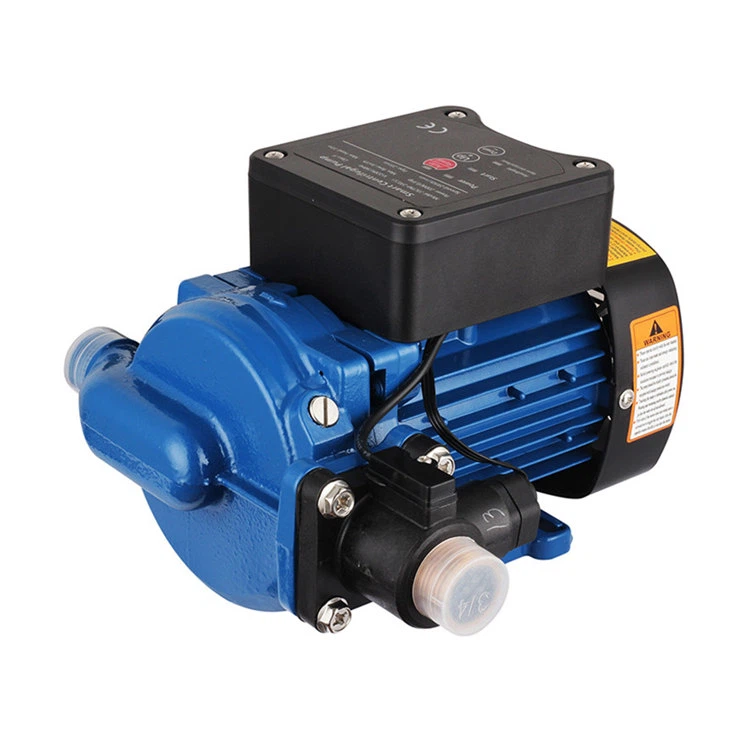
During annual maintenance, disconnect and lockout power to inspect:
● Bearing frame and foot – Inspect for cracks, roughness, rust or scale. Machined surfaces should be free of pitting or erosion.
● Bearing frame – Inspect all tapped connections for dirt. Clean and chase threads as necessary. Remove all loose or foreign material. Inspect lubrication passages to be sure that they are not blocked.
● Shaft and sleeve – Inspect for grooves or pitting. Check bearing fits and shaft runout, and replace the shaft and sleeve if worn or if the shaft runout is greater than 0.002 inches.
● Casing – Inspect for signs of wear, corrosion or pitting. If wear exceeds a depth of 1/8-inch, the casing should be replaced. Check gasket surfaces for signs of irregularities.
● Impeller – Inspect the impeller for wear, erosion or corrosion damage. If the vanes are bent or show wear in excess of 1/8-inch deep, replace the impeller.
● Frame adapter – Inspect for cracks, warping or corrosion damage and replace if any of these conditions are present.
● Bearing housing – Inspect for signs of wear, corrosion, cracks or pits. Replace housings if worn or out of tolerance.
● Seal chamber/stuffing box cover – Check for pitting, cracks, erosion or corrosion. Inspect for any wear, scoring or grooves that might be on the chamber face. Replace if worn more than 1/8-inch deep.
● Shaft – Check the shaft for any evidence of corrosion or wear and straightness. Noting that the maximum total indicator reading at the sleeve journal and coupling journal should not exceed 0.002 inches.
Crucial Factors to Consider When Choosing Electric Centrifugal Water Pump
Uses
From humble beginnings lifting mud in its first application of the centrifugal pump, which was invented in the modern model in 1851, this type of pump is used today in thousands of communities and industrial settings. These kinds of pumps are now commonly used to move water, sewage, oil or other industrial chemicals.
Individual differences
All electric centrifugal water pump use the same operating principal, however there are some individual differences among makes and models that determine the effectiveness of the pump at certain tasks. For example, centrifugal water pumps may be designed a little bit different than those meant to move sewage, simply by changing impeller styles the application can be varied. However, there are also some overall differences that impact the quality of one pump to another.
General look-over
The key then in determining what you want to look for in your centrifugal pump is to identify these amongst other factors and select the style of pump which will be suitable for your application. You should make sure that you know what kind of system you're working with and ensure you match the pump style and design to your application.
Smooth running
The first thing to check in a centrifugal pump is the correlation between pressure and flow in relation to the application, a pump which is correctly selected and matched with a particular application and duty will run smoother as well as extending its lifespan.
Add-ons to the pump can also help it perform better such as the correct pipe design. Eccentric reducers are fitted to the suction of the pump and when correctly installed reduce the risk of air locks, which is problematic. Other components can include valves and gauges that would make the system easier to monitor and control.
Valves and gauges
Pressure gauges are important to have on your pump because it makes it much easier to monitor the status of the pumps and the system, and enable you to establish if there are any problems in the system, as well as assist you to pinpoint any deterioration in the pumping system. A check, or foot valve is installed to prevent fluid from backing flowing. Suction and discharge valves are important so that the pump can be isolated from the system for maintenance or repairs.
Centrifugal factors
Although there are many types of pumps out there, electric centrifugal water pump are the most common, and are used in the pumping of water, sewage, slurries and industrial chemicals.
What Factors Should Be Considered When Determining the Size of the Electric Centrifugal Water Pump Motor?
When sizing a electric centrifugal water pump motor, you need to consider the following factors: The power requirement, the rpm required, the speed range, and the noise level.
Some factors that you may want to consider when sizing a motor for an application are the power requirement, the rpm required, and the speed range. When sizing a motor for an application, you need to consider what type of pump it will be used with. If it is a piston pump or a centrifugal pump, then you need to think about how powerful the motor needs to be in order to move the fluid. For example, if you are using a piston pump and your application requires 1 horsepower, then you would use a 1 hp motor. However, if your application requires 10 hp and your pump has a maximum rating of 5 hp, then you would use a 5 hp motor.
Another factor that you may need to think about when sizing a motor for an application is the speed range. For example, if your application requires 50 rpm but your pump can only operate at 30 rpm, then you would need to use a 30 rpm motor. However, if your pump can operate at 50 rpm or above, then you could use a 50 rpm.
Our Factory
Taizhou Hanner Machinery Co., Ltd is a group company with three factories and one trade company, professional in all kinds of water pump, motor, pump accessories, etc. HANNER becomes stronger year by year fully relying on competitive prices, excellent product quality and professional service.

FAQ
Q: What is the difference between electric pump and centrifugal pump?
Q: What does a centrifugal water pump do?
Q: What is the main purpose of a centrifugal pump?
Q: When should a centrifugal pump be used?
Q: What are the benefits of an electric centrifugal water pump?
Q: What applications are best suited for an electric centrifugal water pump?
Q: What factors should be considered when selecting an electric centrifugal water pump?
Q: How do you maintain an electric centrifugal water pump?
Q: Does a electric centrifugal water pump need servicing?
Q: What parts of a electric centrifugal water pump need maintenance?
Q: What destroys a electric centrifugal water pump?
Q: What not to do with a electric centrifugal water pump?
Q: What is the most common problem of electric centrifugal water pump?
Q: How do I know if my electric centrifugal water pump impeller is bad?
Q: What is a centrifugal water pump?
Q: What are the advantages of a centrifugal water pump?
Q: What are the common applications of centrifugal water pumps?
Q: How do I choose the right centrifugal water pump for my application?
Q: Can you repair a electric centrifugal water pump?
Q: Does it hurt a electric centrifugal water pump to run continuously?
Hot Tags: electric centrifugal water pump, China electric centrifugal water pump manufacturers, suppliers, factory, Domestic Centrifugal Pump, Stainless Steel Booster Pumps, Centrifugal Pump, Electric Centrifugal Water Pump, High Flow Centrifugal Pump, Horizontal Single Stage Centrifugal Pump


