


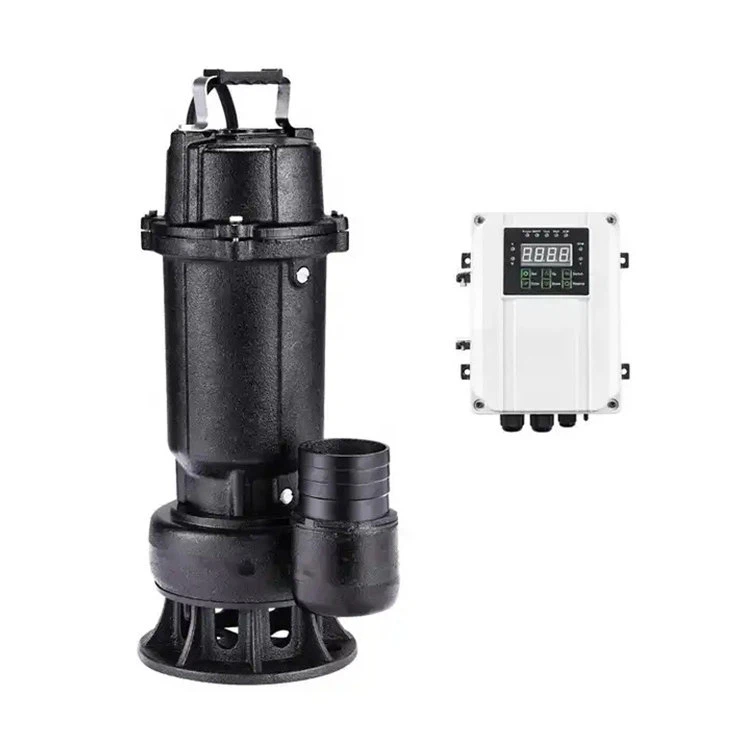
A solar submersible pump is a specialized type of water pump designed to operate while fully submerged in a body of water, such as a well, reservoir, or river. Powered entirely by solar energy, these pumps utilize solar panels to convert sunlight into electrical energy, which is then used to drive the pump's motor.
Advantages of Solar Submersible Pump
Safe
All internal components of a submersible pump stay completely sealed from the water or other foreign elements. Hence, it is safer to use a submersible pump in comparison to other types of pumping devices.
Portable
Submersible pumps are lightweight pumping machines with a compact structure. Hence, it can be carried by one person to different places based upon a user's requirements or pumping requirements.
Priming
There is no need to prime a submersible pump since it functions below the level of the liquid that is being pumped out. Therefore, a submersible pump can be easily used and maintained.
Leak Proof
A submersible pump is fitted with watertight seals and gaskets. This type of sealed structure prevents the leakage of fluid from the submersible pump. The internal components of the pump remain completely sealed which eliminates any possibility of electrical accident.
Efficient
A submersible pump is submerged in the liquid that is being transferred. Hence, it need not use a lot of kinetic energy in order to suction the liquid out. Thus, it can use most of its kinetic energy to move the fluid through the outlets which increases its efficiency. On the other hand, the pump need not work hard since less kinetic energy is required for the transfer of liquid. The longevity of a submersible pump increases due to this reason.
Noise Level
A submersible pump is not noisy when the motor is running since the pump remains submerged. Therefore, the sound is muffled to some extent by the water or any other liquid wherein the pump remains.


why choose us
Our Products
Our products are all strictly controlled at every step during designing, producing, packing and quality controlling process. We will keep optimizing our products and expanding the scope of product category.
Quick Transportation
We cooperate with professional sea shipping, air and logistics companies to provide you with the best transportation solution.
Cheap Price
We have a professional purchasing team and costing team, trying to reduce costs and profits, and provide you with a good price.
One-stop Solution
With rich experience and one-to-one service, we can help you choose products and answer technical questions.
Deep Well Solar Pumps
These pumps are designed to pump water from great depths, often up to 300 feet or more. They are typically high-lift pumps with powerful motors capable of lifting water against gravity. Deep well solar pumps can be either centrifugal or spiral rotor pumps, depending on depth and flow requirements.
Surface Solar Pumps
Surface pumps are used where the water source is at or near the surface level, such as a pond, lake, or shallow well. They have less lift than deep well pumps but higher flow rates, making them ideal for large-scale irrigation or livestock watering.
Submersible Solar Borehole Pumps
These pumps are installed inside a borehole or well and are suitable for pumping water from a depth of 80 feet. They are compact, efficient, and can handle the corrosive effects of groundwater better than above-ground pumps.
Pressurized Solar Pump
A pressurized system uses a solar pump to fill a pressure tank and then deliver the water to a faucet, sprinkler, or other outlet. This unit provides stable water pressure and is suitable for residential use or small irrigation projects.
Float switch and float controlled solar pumps
These pumps have float switches that automatically turn the pump on or off when the water reaches a certain level. This prevents the pump from running dry and helps maintain optimal water levels in the tank or pond.
Direct current (DC) and alternating current (AC) pumps
Some solar submersible pumps run directly on DC power from solar panels, while other pumps may include an inverter to convert DC power to AC power for use with standard home electrical systems use.
Tracking and non-tracking solar panels
To maximize efficiency, some solar submersible pump systems include tracking panels that follow the movement of the sun throughout the day. Non-tracking panels are fixed and typically placed during peak hours to capture as much sunlight as possible.
With solar panels you are able to harness the power of the sun in order to power a submersible pump. Solar pumps absorb radiant solar energy transforming it into electricity. Solar panels create a significant movement of electrons, and when photons from the sun hit the electron-rich layer on a solar panel you are converting the sun’s rays to electricity that will circulate water and operate your pump. Solar panels collect photons from sunlight, which produces the Direct Current that provides the energy for the motor to pump water out of its source. The inverter for the pump converts the Direct Current into Alternating Current, which powers the pump.
How Do You Determine the Appropriate Size of a Solar Submersible Pump for a Specific Application
Determine Water Requirements
Start by determining the water requirements for your specific application. This includes the desired flow rate (in liters per minute or gallons per hour) and the total head or lift required (the vertical distance the water needs to be pumped).
Calculate Total Dynamic Head (TDH)
The TDH is the total resistance the pump needs to overcome to deliver water to the desired location. It includes the vertical lift, friction losses in the pipes, and any other resistance in the system. Calculate the TDH by adding the vertical lift to the friction losses.
Select Pump Efficiency
Consider the efficiency of the pump you are considering. Pump efficiency is typically expressed as a percentage and represents how effectively the pump converts input power into water flow. Higher efficiency pumps will require less solar power to achieve the desired flow rate.
Determine Solar Power Availability
Assess the solar power availability at the installation site. This involves considering factors such as the average daily solar radiation, the number of sunlight hours per day, and any shading or obstructions that may affect solar panel performance. This information will help determine the solar panel size and the amount of power available for the pump.
Calculate Required Solar Panel Size
Calculate the required solar panel size based on the power requirements of the pump and the solar power availability at the site. This involves considering the pump's power consumption (in watts) and the solar panel's efficiency. Divide the pump's power consumption by the solar panel's efficiency to determine the minimum solar panel size needed.
Consider Battery Storage
If the pump needs to operate during periods of low sunlight or at night, consider incorporating a battery storage system. The battery can store excess solar power during the day and provide power to the pump when sunlight is limited. Determine the appropriate battery size based on the pump's power consumption and the desired operating time.
Consult Manufacturer Specifications
Consult the manufacturer's specifications and recommendations for the specific solar submersible pump model you are considering. Manufacturers often provide guidance on the pump's performance, power requirements, and recommended solar panel and battery sizes for different applications.

Are There Any Specific Safety Considerations When Using a Solar Submersible Pump
Electrical Safety
Ensure that the solar submersible pump is rated for the intended voltage and current. Do not overload the pump or use incompatible power sources.
Always disconnect the power supply before performing any maintenance or repairs on the pump or its associated components.
Avoid using wet hands or tools when handling electrical connections or components to prevent electrical shock.
Use insulated gloves and tools when working with electrical components.
Installation Safety
Follow the manufacturer's installation instructions carefully. Improper installation can lead to safety hazards.
Ensure that the pump is installed in a stable and secure location, free from any obstructions or hazards.
Use appropriate fittings and connections to secure the water pipe and prevent leaks or ruptures.
Operating Safety
Do not operate the pump without sufficient water in the well or borehole. Running the pump dry can damage it and pose a safety risk.
Monitor the pump's operation regularly and check for any abnormal noises, vibrations, or leaks.
Shut down the pump immediately if any safety issues or malfunctions are detected.
Environmental Safety
Dispose of any used batteries or other components responsibly to prevent environmental pollution.
Ensure that the pump is installed in a way that does not damage the surrounding environment, such as by avoiding the destruction of natural habitats.
Personal Safety
Avoid contact with moving parts of the pump to prevent injuries.
Use appropriate safety equipment, such as helmets, gloves, and safety shoes, when handling or working near the pump.
Do not attempt to repair or maintain the pump while it is operating.
Regular Inspection
Perform regular visual inspections of the pump, solar panels, and associated components to identify any damage, corrosion, or leaks.
Check for any cracks, chips, or other visible damage on the pump casing and impeller.
Ensure that all connections and fasteners are secure and tight, without any loose or missing parts.
Cleaning
Clean the solar panels regularly to remove dust, dirt, and debris that can affect their efficiency. Use a soft cloth or a water-soaked sponge to clean the panels.
Inspect and clean the pump intake screen or strainer to remove any accumulated debris that may block the water flow.
Check the pump's impeller for debris or blockage and clean it if necessary.
Lubrication
If the pump has any moving parts that require lubrication, ensure to use the recommended lubricant and apply it according to the manufacturer's instructions.
Check the lubricant level and quality regularly and replace it when necessary.
Electrical Maintenance
Inspect the electrical connections and cables for any damage, fraying, or corrosion. Replace any damaged cables or connectors immediately.
Ensure that the pump's motor is dry and free from debris. Clean and dry the motor if necessary.
Check the pump's controller or inverter for any fault codes or warnings. Refer to the manufacturer's manual for troubleshooting and repair instructions.
Storage and Protection
When the pump is not in use, store it in a dry, protected location to prevent damage from moisture, dust, or debris.
Cover the solar panels with a protective tarp or cloth to protect them from dirt, dust, and weather elements.
Maintenance Schedule
Establish a regular maintenance schedule for the pump and follow it consistently. The schedule should include monthly, quarterly, and annual maintenance tasks.
Keep a record of all maintenance activities, including inspections, repairs, and replacements, to help track the pump's performance and identify any potential issues.
What Are the Power Requirements of a Solar Submersible Pump



Pump Capacity and Power Consumption
The pump's capacity, typically measured in liters per minute (LPM) or gallons per minute (GPM), determines the amount of water it can move in a given time.
The power consumption of the pump is typically measured in watts (W) or horsepower (HP). The higher the capacity, the more power the pump requires.
Solar Panel Power Output
Solar submersible pumps are powered by solar panels, which convert sunlight into electrical energy.
The power output of solar panels is measured in watts (W). The required power output depends on the pump's power consumption and the amount of sunlight available at the installation site.
It's important to select solar panels with sufficient power output to meet the pump's requirements, even during low-light conditions.
Battery Storage
Solar submersible pumps often rely on batteries to store the energy generated by solar panels, allowing the pump to operate even when there's no direct sunlight.
The battery's capacity, measured in ampere-hours (Ah) or watt-hours (Wh), should be large enough to power the pump throughout the day and night, depending on the pump's usage pattern.
Additionally, the battery's voltage should match the pump's voltage requirements.
Inverter or Charge Controller
An inverter or charge controller is used to convert the direct current (DC) generated by the solar panels into alternating current (AC) for the pump's motor.
The inverter or charge controller should be rated for the pump's power requirements and have the necessary features to protect the battery and the pump from overvoltage, undervoltage, and other electrical issues.
Power Losses and Efficiency
There are power losses associated with the conversion of solar energy to electrical energy and then to mechanical energy for pumping.
It's important to consider the overall efficiency of the solar system, including the efficiency of the solar panels, the inverter, and the pump itself.
Sizing the Solar System
To determine the appropriate size of the solar system (including solar panels, batteries, and inverter), it's necessary to consider the pump's power requirements, the average daily sunlight hours at the installation site, and the pump's usage pattern.
Consulting with a solar system installer or professional can help ensure that the solar system is sized correctly to meet the pump's power requirements.
How Does the Solar Submersible Pump Handle Dirty or Sediment-Laden Water
Impeller Design
The impeller, which is the rotating part of the pump that moves water, is often made of materials that can withstand abrasive particles without wearing out quickly. Some impellers have a closed design that prevents debris from entering the pump, while others may have a protective cage around them to deflect larger particles.
Filter Screens
Most solar submersible pumps come with intake screens that filter out large debris before the water reaches the impeller. These screens are usually removable for cleaning, ensuring that the pump doesn't become clogged with leaves, twigs, or other large materials.
Motor Protection
The electric motor of a solar pump is shielded from direct contact with the water to prevent damage from sediment and abrasive particles. Some motors are encapsulated in a sealed housing that resists corrosion and keeps dirt away from sensitive components.
Pump Materials
Solar submersible pumps are often constructed from corrosion-resistant materials such as stainless steel, bronze, or high-grade plastics. These materials can endure the harsh conditions of dirty water environments without degrading over time.
Self-Cleaning Mechanisms
Some advanced solar submersible pumps are equipped with self-cleaning features that automatically remove particles from the impeller and screen, reducing the need for manual cleaning and maintaining optimal performance.
Maintenance Accessibility
Ease of maintenance is another important consideration. Pumps that are designed for dirty water should be easy to disassemble for cleaning and repair. This includes having accessible screws, clamps, and connections that can be reached without specialized tools.
Durable Shaft and Bearings
The shaft that connects the impeller to the motor must be strong and flexible enough to handle the abrasive nature of dirty water. High-quality bearings are essential to reduce friction and prevent premature wear due to sediment.
System Design
The overall design of the solar pumping system should take into account the potential for dirty water. This includes appropriate pipe sizing to minimize pressure loss and the use of check valves to prevent backflow, which could introduce additional sediment into the system.
Site Selection and Preparation
Choose a suitable location for the solar panels. Ensure they will receive direct sunlight for most of the day, avoiding shade from trees, buildings, or other obstacles.
Clear the installation site of debris, ensuring a flat and stable surface for the solar panels and batteries.
If the pump is to be installed in a well or borehole, ensure the well is clean and free of debris. Measure the depth of the well and ensure it's compatible with the pump's depth rating.
Pump Installation
Lower the solar submersible pump into the well or borehole, ensuring it's securely positioned at the desired depth.
Connect the pump to the piping system, ensuring tight and leak-free connections.
Secure the pump in place using appropriate brackets or fixtures to prevent it from moving or floating.
Solar Panel Installation
Mount the solar panels on the prepared site, using brackets or poles to secure them at an optimal angle for sunlight exposure.
Connect the solar panels together using cables, ensuring the polarity is correct.
Run the cables from the solar panels to the battery storage system, protecting them from damage and weather exposure.
Battery Storage System Installation
Position the battery storage system in a dry, well-ventilated area, close to the solar panels but away from direct sunlight.
Connect the batteries to the solar panels using appropriate cables and connectors.
Ensure the batteries are charged before connecting the pump to the system.
Inverter or Charge Controller Installation
Install the inverter or charge controller near the battery storage system, ensuring it's protected from moisture and dust.
Connect the inverter or charge controller to the batteries and solar panels, following the manufacturer's instructions.
Configure the inverter or charge controller settings to match the pump's power requirements and the solar system's configuration.
Pump Power Connection
Connect the pump to the inverter or charge controller using appropriate cables and connectors.
Ensure the cables are rated for the pump's power requirements and are protected from moisture and damage.
Test the pump's operation by activating the solar system. The pump should start operating once the batteries are charged and the solar panels are receiving sunlight.
System Monitoring and Maintenance
Regularly monitor the system's performance, checking the water flow rate, battery charge level, and solar panel output.
Clean the solar panels regularly to remove dust and debris, ensuring optimal sunlight exposure.
Perform routine maintenance on the pump, batteries, and solar system components, following the manufacturer's recommendations.
Our Factory
Taizhou Hanner Machinery Co., Ltd is a group company with three factories and one trade company, professional in all kinds of water pump, motor, pump accessories, etc. HANNER becomes stronger year by year fully relying on competitive prices, excellent product quality and professional service.


FAQ
As one of the leading solar submersible pump manufacturers and suppliers in China, we warmly welcome you to wholesale hot selling solar submersible pump from our factory. All customized products are with high quality and competitive price.
Solar DC Submersible Pump, Solar Submersible Pump 1hp, Solar Submersible Pump