

Domestic Pump
A domestic pump is a type of pump specifically designed for use in residential applications, where it provides the necessary pressure to move water throughout a household's plumbing system. These pumps are integral to ensuring that water is supplied reliably to fixtures such as sinks, showers, toilets, and washing machines, regardless of whether the home is connected to a municipal water supply or relies on a private well.
Increased Water Pressure
One of the primary advantages of a domestic booster pump is its ability to significantly increase water pressure throughout your home. Low water pressure can make activities like showering, using faucets, and filling water containers a time-consuming and frustrating experience. With a booster pump, you can enjoy a consistent and powerful water flow, enhancing your overall comfort and convenience.
Improved Performance of Appliances
Household appliances that rely on water, such as washing machines and dishwashers, often require sufficient water pressure to function optimally. A domestic booster pump ensures that these appliances receive the necessary water flow, improving their performance and efficiency. Clothes and dishes will be cleaner, and cycles will complete in a shorter time, allowing you to save both time and energy.
Enhanced Shower Experience
A relaxing and refreshing shower can be an excellent way to start or end your day. However, weak water pressure can diminish the pleasure of this simple luxury. Installing a domestic booster pump can transform your shower experience, providing you with a rejuvenating cascade of water. You can enjoy a luxurious, spa-like shower in the comfort of your own home, washing away the stresses of the day.
Efficient Garden and Lawn Irrigation
Maintaining a beautiful garden or a lush lawn requires adequate watering. However, when the water pressure is insufficient, it becomes challenging to effectively irrigate your outdoor spaces. By integrating a domestic booster pump into your water system, you can ensure that your garden receives the proper water pressure for efficient irrigation. Your plants will thrive, and you’ll have a healthier and more vibrant outdoor space to enjoy.
Elimination of Plumbing Issues
Low water pressure can be a symptom of various plumbing issues, such as clogged pipes or leaks. While addressing these underlying problems is crucial, a domestic booster pump can provide a temporary solution in the meantime. By boosting the water pressure, it compensates for any existing plumbing issues, allowing you to enjoy a consistent water flow until the underlying problems are resolved.


why choose us
Our Products
Our products are all strictly controlled at every step during designing, producing, packing and quality controlling process. We will keep optimizing our products and expanding the scope of product category.
Quick Transportation
We cooperate with professional sea shipping, air and logistics companies to provide you with the best transportation solution.
Cheap Price
We have a professional purchasing team and costing team, trying to reduce costs and profits, and provide you with a good price.
One-stop Solution
With rich experience and one-to-one service, we can help you choose products and answer technical questions.
Shallow Well Pumps
Shallow well pumps are designed for wells that are less than 25 feet deep. They are typically installed above ground and use a single-stage centrifugal pump to draw water from the well. These pumps are relatively simple and easy to install, making them a popular choice for residential properties with shallow wells.
Deep Well Pumps
Deep well pumps are designed for wells that are deeper than 25 feet. They are typically installed below ground and use a multi-stage centrifugal pump to draw water from the well. Deep well pumps are more powerful and efficient than shallow well pumps, making them suitable for properties with deep wells or high water demands.
Submersible Pumps
Submersible pumps are installed below the water level in a well or storage tank. They are powered by an electric motor and use a multi-stage centrifugal pump to move water to the surface. Submersible pumps are highly efficient and can handle large volumes of water, making them ideal for residential properties with high water demands or wells that are deeper than 25 feet.
Booster Pumps
Booster pumps are designed to increase the water pressure when it is insufficient due to distance from the water source, small pipe diameter, or low mains pressure. They are typically installed after the water meter or near the pressure tank and use a centrifugal pump to increase the pressure of the water flowing through the plumbing system.
Centrifugal Pumps
Centrifugal pumps are the most common type of domestic pump and are used for a variety of applications such as water supply, irrigation, and wastewater treatment. They use a rotating impeller to create suction and move water, and are known for their efficiency and simplicity.
Positive Displacement Pumps
Positive displacement pumps are designed to deliver a constant flow rate of water, regardless of changes in pressure. They use a piston or diaphragm to physically displace water and are ideal for applications where a consistent flow rate is required, such as irrigation or industrial processes.

Cast iron is a common material used in the manufacturing of pumps. It offers good durability, strength, and resistance to wear and corrosion. Cast iron pumps are typically used for applications involving water supply, irrigation, and industrial processes.Stainless steel is a corrosion-resistant material that is often used in pumps handling potable water or liquids with low corrosiveness. It provides good strength and durability and is suitable for applications in residential, commercial, and industrial settings.Bronze is a material known for its excellent corrosion resistance and durability. It is commonly used in pumps handling liquids with higher corrosive properties, such as seawater or chemicals. Bronze pumps are often found in marine, industrial, and chemical processing applications.Thermoplastic materials, such as polypropylene (PP) or polyvinyl chloride (PVC), are increasingly used in domestic pumps due to their lightweight, chemical resistance, and affordability. These materials are suitable for handling a variety of liquids, including water, chemicals, and wastewater.Ceramic materials, such as porcelain or glass, are sometimes used in the construction of pumps for specific applications. Ceramic pumps offer excellent chemical resistance and are suitable for handling corrosive liquids in laboratory or chemical processing settings.
Application of Domestic Pump
Water Supply
The primary function of a domestic pump is to deliver water from a source, such as a well, municipal water supply, or rainwater harvesting system, to the home. In areas with low water pressure, booster pumps are employed to enhance the flow rate, ensuring that taps and showers provide adequate water pressure. For homes with private wells, whether shallow or deep, the appropriate type of well pump is essential to extract water effectively.
Irrigation Systems
Domestic pumps are also used to power irrigation systems. Garden pumps can be connected to hoses and sprinklers to distribute water across lawns and flower beds, promoting healthy plant growth. These pumps can be manual or automatic, with some models equipped with timers for convenient and efficient watering schedules.
Heating Systems
In forced hot water systems, pumps are critical in circulating water through radiators or underfloor heating systems. Without a circulation pump, the water would not flow efficiently throughout the system, leading to uneven heating and reduced comfort.
Appliance Support
Certain domestic appliances, like washing machines and dishwashers, require a consistent supply of water at specific pressures. Pumps ensure that these appliances receive the necessary water flow to operate correctly, thereby extending their lifespan and improving their performance.
Wastewater Management
Sewage ejector pumps are used in homes where the main sewage line is located below the level of the basement floor. These pumps lift wastewater and sewage up to the level of the main sewer line, preventing backups and ensuring proper drainage.
Water Heating
In tankless water heaters, pumps may be integrated to rapidly circulate water through the unit, providing instant hot water at the tap without the need for a storage tank. This not only saves energy but also offers convenience to the user.
Emergency Situations
During power outages or when the municipal water supply fails, backup pumps can be crucial. These pumps run on alternative power sources, such as generators or batteries, ensuring that essential services like flushing toilets and basic sanitation remain available until normal service is restored.
Aquariums and Ponds
Domestic pumps are also used in aquariums and garden ponds to maintain water circulation, which is vital for oxygenation and waste removal. Adequate circulation prevents stagnation and helps to maintain a healthy ecosystem for fish and aquatic plants.
The basic principle behind how a domestic pump works is based on centrifugal force. The pump contains an impeller, which is a rotor with blades that rotate inside a casing. When the motor is turned on, the impeller rotates at high speed, generating centrifugal force that pushes the liquid towards the outer edge of the impeller.As the liquid is pushed towards the outer edge of the impeller, it enters a volute or diffuser, which channels the flow and increases the pressure of the liquid. The increased pressure causes the liquid to be forced through the pump and out through a discharge valve or pipe.Domestic pumps can be used for a variety of applications, including water supply, irrigation, and wastewater removal. They can be installed in wells, tanks, or other containers to draw water from a source and deliver it to a household or building. Some domestic pumps are also designed to handle chemicals or other liquids with specific properties.A domestic pump works by using an electric motor or other power source to rotate an impeller, which generates centrifugal force that pushes the liquid through the pump and increases its pressure. The increased pressure forces the liquid to be delivered to the desired location through a discharge valve or pipe. Domestic pumps can be used for a variety of applications, including water supply, irrigation, and wastewater removal.
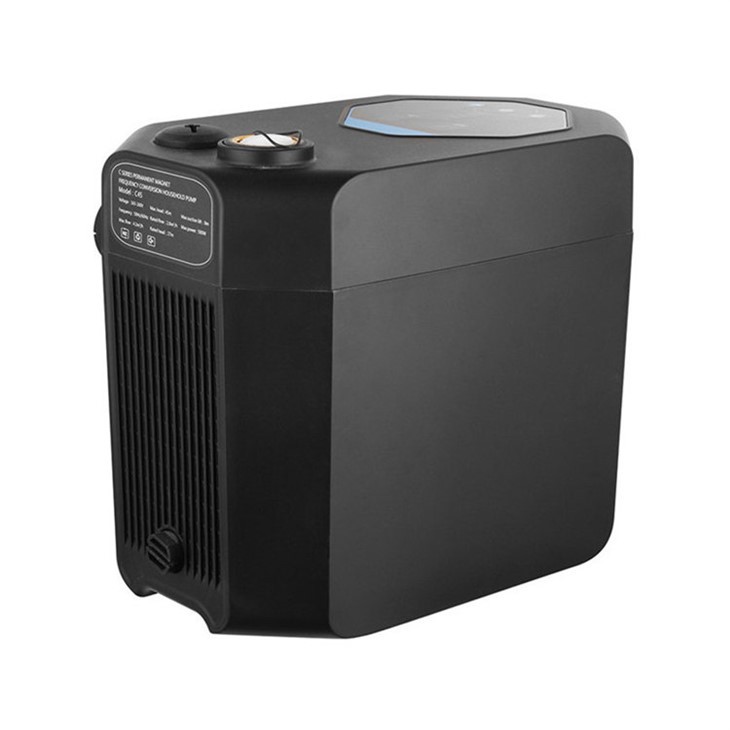
One of the main components of a home pump is the motor. The motor provides the power to drive the pump and can be an electric motor or a gasoline engine, depending on the specific application and requirements. The motor is connected to the pump via a shaft or belt, which transmits power to the pump impeller. The water pump impeller is another important component of a household water pump. It is a rotor with blades that rotates inside a housing. When the motor drives the impeller, the blades create centrifugal force that pushes the liquid toward the outer edge of the impeller. This action increases the pressure of the liquid, forcing it through the pump and out through a discharge valve or pipe.
Volutes or diffusers are also commonly found in household pumps. It is the component that directs the flow of liquid from the impeller and helps increase the pressure of the liquid as it leaves the pump. The volute or diffuser also helps reduce the velocity of the liquid and converts the kinetic energy of the flow into pressure energy. In addition to the motor, impeller, and volute or diffuser, a home pump may include suction and discharge valves. The suction valve allows liquid to enter the pump as the impeller rotates, while the discharge valve controls the flow of liquid out of the pump. Some home pumps may also include a pressure switch or sensor that activates the pump when the water pressure in the system drops below a certain level.
Domestic pumps may also include a casing or casing that encloses the various components of the pump. The casing protects the pump from damage and helps prevent leaks or other problems. It may also include a strainer or filter to remove debris or particles from the fluid before it enters the pump. In summary, a household pump usually consists of a motor, an impeller, a volute or diffuser, a suction valve, a discharge valve, a pressure switch or sensor, and a casing or casing. These components work together to move fluids around a home or residential environment, providing water supply, irrigation, and wastewater treatment.
Maintenance Domestic Pump
Periodic inspection
Regularly inspect the pump and its components for signs of wear, damage, or leaks. Check seals, gaskets and hoses for cracks or leaks. Check the electrical connections for any loose or damaged wires.
Clean
Keep the pump and its parts clean. Remove any dirt, debris, or sediment that may have accumulated around the pump. Use a soft brush or cloth to clean the pump casing and remove dirt or debris from the impeller.
lubricating
Lubricate the pump according to the manufacturer's recommendations. Apply appropriate lubricant to bearings, seals and moving parts. Regular lubrication helps reduce friction and extend the life of the pump.
Filter maintenance
Check and clean the pump air inlet filter regularly. A clogged filter reduces your pump's efficiency and makes it work harder. If the filter is damaged or worn, replace it.
Electronic system
Check the electrical system, including power cords, motors, and control panels. Check for any signs of damage, loose connections, or electrical faults. If you suspect any electrical problems, consult a professional electrician.
Storage
If the pump will not be used for an extended period of time, store it in a clean, dry place. Cover the pump to protect it from dust and moisture. If possible, drain the water from the pump to prevent rust or corrosion.
Professional service
Consider scheduling professional maintenance of your pump on a regular basis following the manufacturer's recommendations. Professional technicians can thoroughly inspect, clean, and maintain your pump to ensure optimal performance.
What Is the Power Source of a Domestic Pump
Electric Power Sources
The most common power source for domestic pumps is electricity. Electric pumps convert electrical energy into mechanical energy to drive the pump's impeller, creating the flow of water. These pumps can be connected directly to the mains electricity supply or operated using a battery.
Direct Mains Connection
Pumps connected to the mains supply benefit from a constant and reliable power source. They can be either single-phase or three-phase, depending on the voltage and current requirements of the pump and the application. Single-phase motors are typically used for smaller pumps, while larger, more powerful pumps often require a three-phase connection for efficient operation.
Battery-Operated Pumps
Battery-operated pumps are ideal for situations where access to mains electricity is limited or for portable applications. These pumps usually require rechargeable batteries, and their runtime is dependent on the capacity of the battery and the power demands of the pump. Battery-operated pumps are commonly found in garden fountains, small irrigation systems, or as backup pumps in critical applications.
Solar Power
With the increasing emphasis on renewable energy sources, solar-powered pumps have gained popularity. Solar pumps use photovoltaic (PV) panels to convert sunlight into electrical energy, which is then used to power the pump. Solar pumps are environmentally friendly, cost-effective in the long run, and particularly suitable for remote locations or areas with abundant sunlight.
Manual Power Sources
Some domestic pumps are powered manually, requiring human effort to operate. These pumps include hand pumps and treadle pumps, which are typically used in areas without electricity or when a temporary solution is required. Manual pumps are simple, durable, and do not rely on external power sources, making them useful in emergencies or for small, intermittent water needs.
Hydraulic Power Sources
Hydraulic pumps utilize the flow of water under pressure to create additional flow or head. They are driven by a separate prime mover, such as a diesel engine or electric motor, which powers a hydraulic pump. Hydraulic pumps are commonly used in large-scale irrigation systems and are known for their ability to handle high volumes of water with minimal energy consumption.
How Does a Domestic Pump Differ from Other Types of Pumps
Size and power
Domestic pumps are usually smaller in size compared to industrial or commercial pumps. They are designed to handle the water demands of a typical household, which are generally lower than those in larger-scale settings. The power requirements of domestic pumps are also relatively lower.
Functionality
Domestic pumps are primarily used for supplying water to various household applications such as sinks, showers, toilets, and appliances. They may have specific features like pressure regulation and built-in filters to ensure a smooth water supply.
Installation and ease of use
Domestic pumps are often designed for easy installation and operation. They come with user-friendly controls and interfaces, allowing homeowners to manage and monitor the pump without requiring specialized technical knowledge.
Noise level
Since they are used in residential settings, domestic pumps are often engineered to operate with minimal noise. This is important to avoid disturbance in the household.
Design and aesthetics
Domestic pumps may be available in designs that blend with the interior décor of the home. They can be more visually appealing and may offer options for concealed installation.
Energy efficiency
To minimize energy consumption and operating costs, domestic pumps often focus on energy efficiency. They may incorporate features such as variable speed drives or smart controls to optimize power usage.
Reliability and durability
Given their role in providing essential water services, domestic pumps are built to be reliable and durable. They undergo rigorous quality testing to ensure long-term performance.
Cost
Domestic pumps are generally more affordable compared to pumps used in industrial or commercial settings, as they are produced in larger quantities and designed for consumer markets.
Check valves
One of the common methods is the use of check valves. These are one-way valves that allow water to flow in only one direction. When the pump is operating, the check valve opens to allow water to pass through, but it closes automatically to prevent backflow.
Positive pressure system
The pump creates a positive pressure within the plumbing system. This means that the water is forced in the desired direction, making it difficult for backflow to occur. The pump maintains sufficient pressure to overcome any potential backflow forces.
Anti-siphon devices
Some domestic pumps may incorporate anti-siphon devices. These are specifically designed to prevent the siphoning effect that can lead to backflow. They work by blocking the reverse flow of water and preventing it from being drawn back into the pump.
Proper piping design
The piping system associated with the domestic pump is also crucial for backflow prevention.Proper design and installation ensure that there are no dead ends or areas where water can stagnate and potentially cause backflow.
Seal and gaskets
The pump itself is sealed and equipped with proper gaskets to prevent leaks and backflow. These seals and gaskets help maintain the integrity of the pump and prevent water from flowing in the wrong direction.
Regular maintenance
Proper maintenance of the pump and associated components is important. This includes checking and replacing worn or damaged check valves, seals, and other parts that could affect backflow prevention.
Compliance with local regulations
It's essential to follow local building codes and regulations regarding backflow prevention. These guidelines ensure that the pump and plumbing system meet the necessary standards for safety and hygiene.
Our Factory
Taizhou Hanner Machinery Co., Ltd is a group company with three factories and one trade company, professional in all kinds of water pump, motor, pump accessories, etc. HANNER becomes stronger year by year fully relying on competitive prices, excellent product quality and professional service.


FAQ
Taizhou Hanner Machinery Co., Ltd. is one of the leading domestic pump manufacturers and suppliers in China. We warmly welcome you to wholesale hot selling domestic pump from our factory. All customized products are with high quality and competitive price.
Household Water Booster Pump, Constant Pressure Pump, Intelligent Water Pumps