


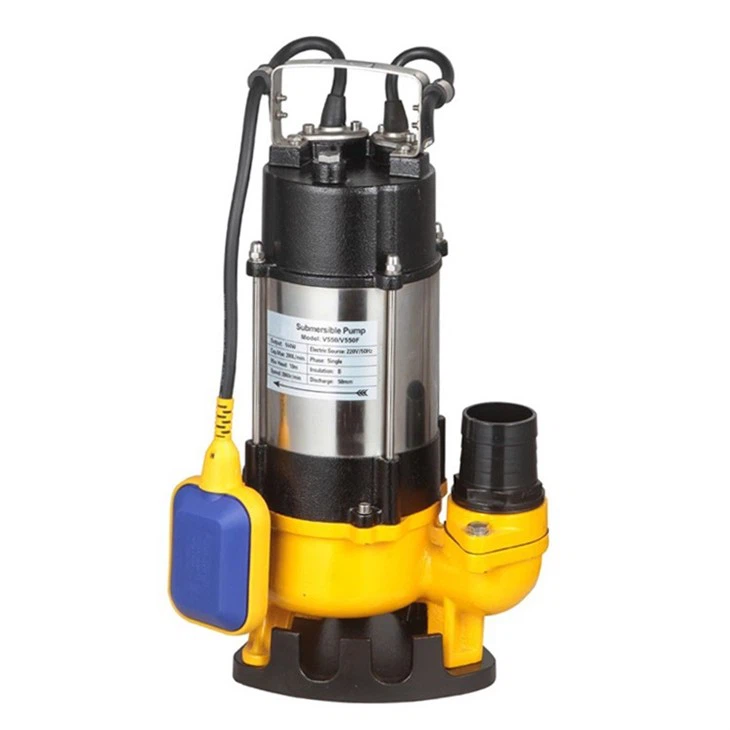


Taizhou Hanner Machinery Co., Ltd. is one of the leading manufacturers and suppliers of submersible sewage water pumps in China, also supports customized service. Welcome to wholesale high quality submersible sewage water pumps at competitive price from our factory. Contact us for more details.
What is a Submersible Sewage Water Pumps?
A sewage pump is used to transfer sewage liquids and solids from one place to another. Usually, in residential applications, sewage includes soft solids up to 2″ in diameter is pumped from a sewage basin to a sewer system or a septic tank. A sewage pump is installed at the lowest point of the sewage basin.
Since the pump is submerged most of the time, it is also referred to as a submersible sewage pump. Sewage pump can be automatic, manual or dual mode. A dual mode pump contains a piggyback plug, which allows the pump to be used as either manual, wherein the pump bypasses the switch and is plugged in directly into the socket or as automatic, wherein the pump is plugged in through the floating switch and works only when the switch is activated.

The Advantages of Submersible Sewage Water Pumps
Convenient and Portable
Submersible pumps are extremely convenient because they are usually small, light and portable. Most have a handle so they are easily carried anyplace they are needed.
Self-Priming
Since a submersible pump is submerged in the liquid it is pumping, it is already "primed" and needs no priming. This saves a lot of hassle and cost, not to mention the maintenance involved if a pump that needs priming is run while dry.
Efficient
Since the pump is already submerged in the liquid it is pumping, the pump doesn't expend much energy with suction lift. This leaves more kinetic energy that can go towards moving the fluids through the outlet. Less energy means that the pump doesn't have to work so hard, which helps with longevity.
Can be Used With Pressure Pumps
A pressure pump needs a supply of water to work and a submersible pump can be submerged into a lake or a well to provide water for a pressure cleaner.
Extremely Resistant to Corrosion
Because a submersible pump has to be hermetically sealed, they have to be made out of materials that are extremely corrosion-resistant, such as stainless steel. Also, the sealing process means that the inside isn't exposed to oxidation or corrosive materials.
Versatile
As we mentioned earlier, there are a lot more uses for submersible pumps than as a basement sump pump. There are also some that operate while only half-submerged and some are designed for handling sewage and other solids.
Space Saving
Any other kind of pump would have to be placed outside of the fluid you are pumping, taking up space. A submersible pump takes up no extra space except for the electrical cord. In your home, that means that the pump ends up in your sump pit.
Safety
The fact that the sump pump is sealed and submerged makes it much less of a safety risk to children than other pumps. A pump with moveable parts sitting outside of your sump pit or basement presents a risk to children and even to adults. You can also put a board over your sump pump to conceal it even further.
Maximum Flow, Minimum Noise
Since the pump is submerged, there isn't nearly as much noise as with a pump that is operating out in the open. The water "dampens" or absorbs most of the sound. In addition, the parts are contained within a sealed unit, creating another barrier against noise.
Less Maintenance, More Durability
The factors we have mentioned here combine to produce a pump that needs almost no maintenance and is going to last a lot longer than other kinds of pumps.
Product Description
The submersible sewage water pumps is specifically designed for the efficient handling and transfer of dirty water and sewage. It is a versatile pump that finds its application in multiple industries and settings such as commercial buildings, industrial plants, and wastewater sampling.
This pump is well-suited for applications where the water or liquid being pumped contains solid particles or debris. Its design allows for the efficient transfer of wastewater and sewage, even in environments with high levels of contamination.
The V series dirty water submersible sewage water pump is built to withstand the demanding conditions of commercial and industrial settings. It is designed to handle the challenges posed by dirty water, ensuring reliable and efficient performance.
Achieving its purpose, this pump helps maintain optimal conditions in various facilities by effectively removing wastewater and sewage. It is a valuable tool in ensuring the cleanliness and proper management of commercial buildings, industrial plants, and wastewater sampling processes.
When selecting a pump for your specific requirements, it's always important to consider factors such as pump capacity, head pressure, and the size and type of solids or debris present in the water. Consulting with a professional or supplier can help you choose the best pump from the V series or other similar options available in the market.

How Do Submersible Sewage Water Pumps Work?
Sewage pumps are devices that are used to pump sewage from one place to another. They are often used to pump sewage from a septic tank to the main sewer line or to pump sewage from the main sewer line to a treatment plant. Sewage pumps can also be used to pump sewage from one building to another, or from one part of a building to another.
When Would I Need a Sewage Pump?
The big question is when exactly would a home owner (or any property owner) need to consider a sewage pump? The answer here isn't a clean cut one, but there are a few criteria you can look for to figure out if your property would benefit from a sewage pump.
No Gravity System In Place
If for example there is no gravity system in place in your property, then you are going to be in need of a sewage pump. That's because whilst some properties are capable of draining their sewage away via a traditional gravity based pipe system, some might not have the elevation to take advantage of this system.
In this case, the sewage pump will be capable of pumping the waste upwards, through the drains until it meets the sewer system.
You might find that this solution is cheaper than installing a gravity based draining system too. In many cases, the actual costs of groundwork can outweigh the installation and use of a sump pump, so it could be a valuable way to save on costs in your property.
This can be the case made by having a basement as well. If the basement is dug too low in a property, then it will eliminate the potential of a gravity based drain system.
In this situation, you may need to look into the possibility of installing a sewage pump next to your sump pump, so that the waste can be pumped up and away from your property safely.
Sewage Pump Alarms
These are the key situations in which your property might require the use of a sewage pump. You have to remember also that there are a lot of different advantages to having a sewer pump. For example, sewage pumps are often fitted with alarms, letting you know immediately (or even before) when there is a problem, helping you to avoid disaster.
Automatic Pumps
The sewage pump will also pump automatically, with no need for its end user (so to speak) to interact with it, which means health problems and interference is kept to a minimum. Also, as just mentioned, sewage pumps can help you save on construction costs when the price of digging out a gravity based drain system outweighs installing a pump.
The thing to take away here then is that a sewage pump deals directly and exclusively with sewage, and is designed to keep any property connected to the sewer system safely. To make sure that your sewage pump system is working on a regular basis, we would recommend a 6 month or annual sewage pump service.
Hot Tags: submersible sewage water pumps, China submersible sewage water pumps manufacturers, suppliers, factory, Submersible Sewage Grinder Pump, Submersible Sewage Water Pumps, Submersible Sewage Pump, Submersible Pump, WQ Submersible Pump, Single Phase Sewage Submersible Pump


